
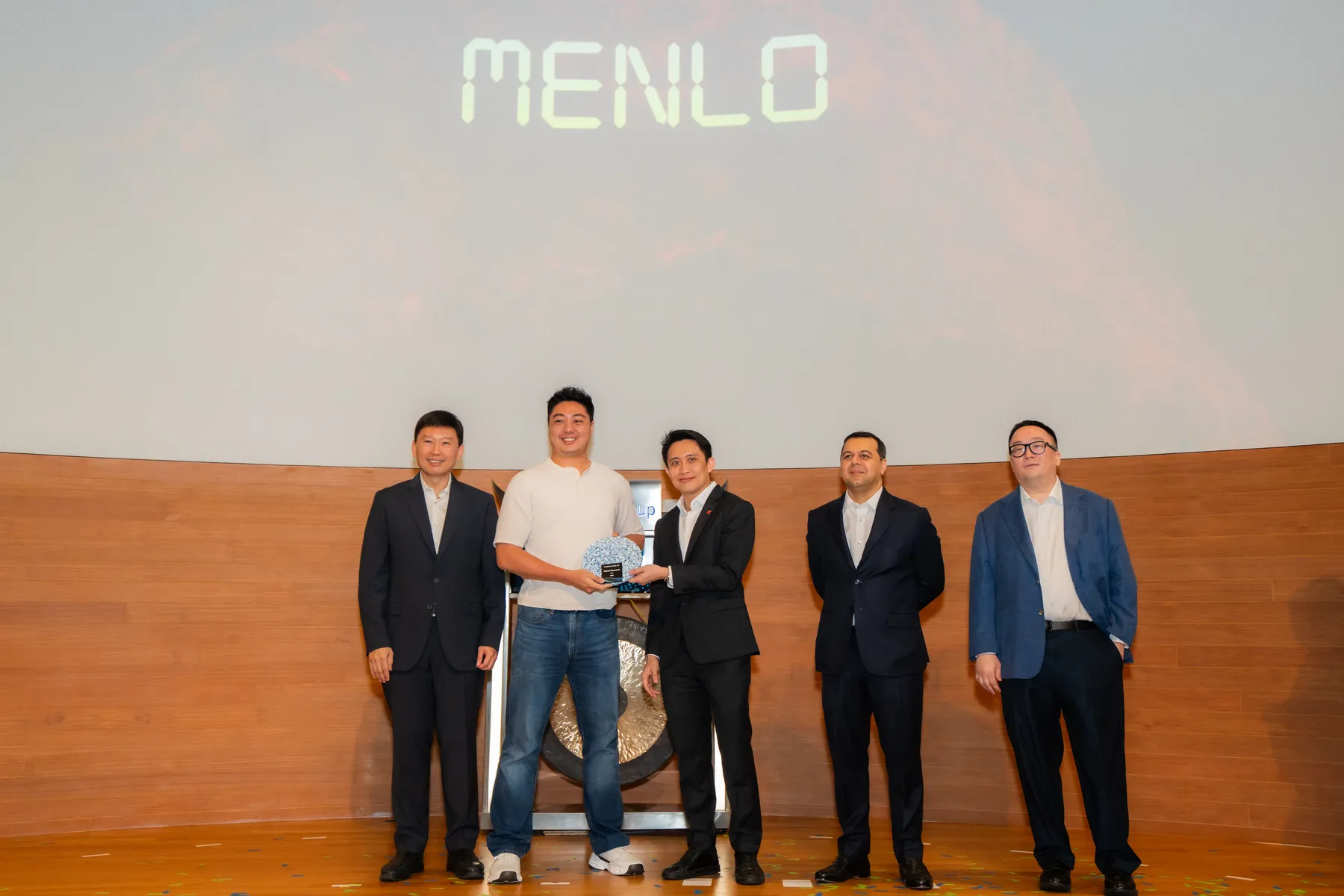
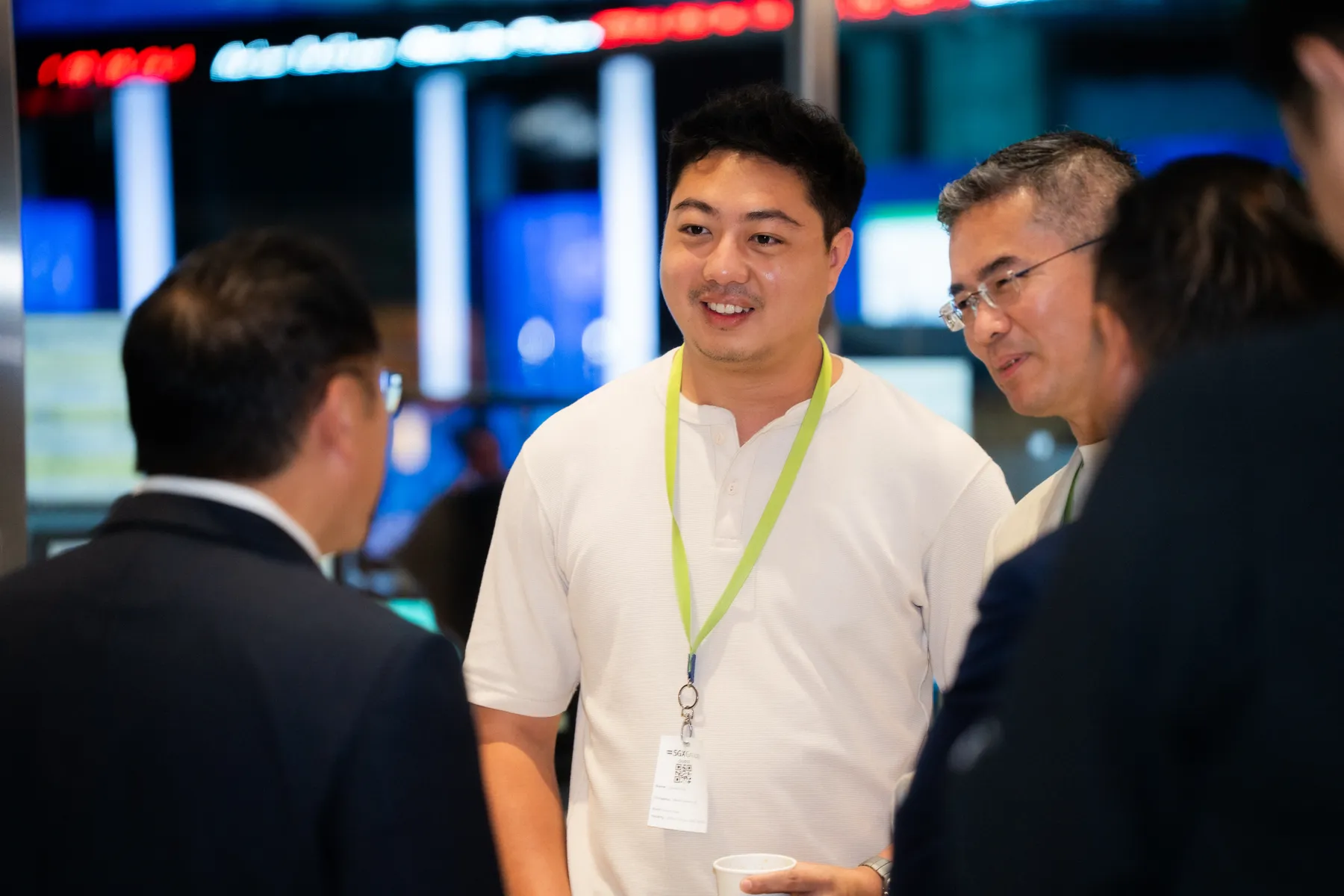
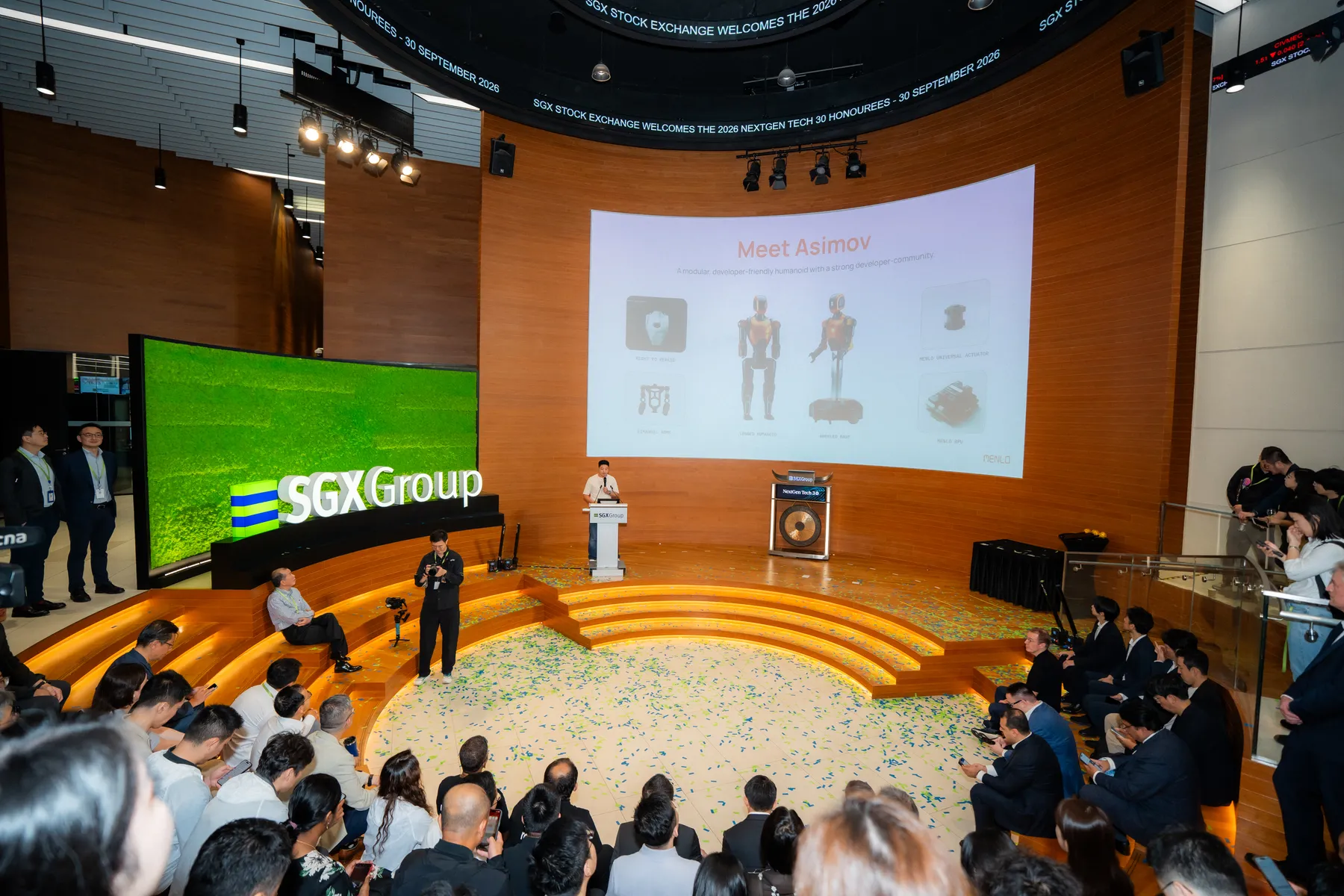
Menlo Research has been recognized by Granite Asia as a 2026 NextGen Tech 30 (NGT30) Honoree. Now in its third year, NGT30 honors the most promising growth-stage technology companies driving the future of Asia's economy. The program convenes sovereign funds, institutional investors, government agencies and industry leaders to elevate companies with the potential to scale globally from Asia.
The 2026 honorees were unveiled on September 30 at SGX's IPO Arena at the start of the trading day, in a program run by Granite Asia in partnership with the Singapore Exchange (SGX). Minister for National Development and MAS deputy chairman Chee Hong Tat sounded the opening gong alongside the founders of this year's honored companies, Menlo Research among them.
This year's cohort reflects a broader shift across the region: more than half of the 30 honorees are applying AI beyond software and into the physical world, from wind farms and warehouses to construction sites and low-Earth orbit. Granite Asia senior managing partner Jenny Lee described the moment as "AI 3.0," the point where AI models move out of the lab and into real-world environments. Across the cohort, the top 30 are growing revenue at more than 100 percent year on year.
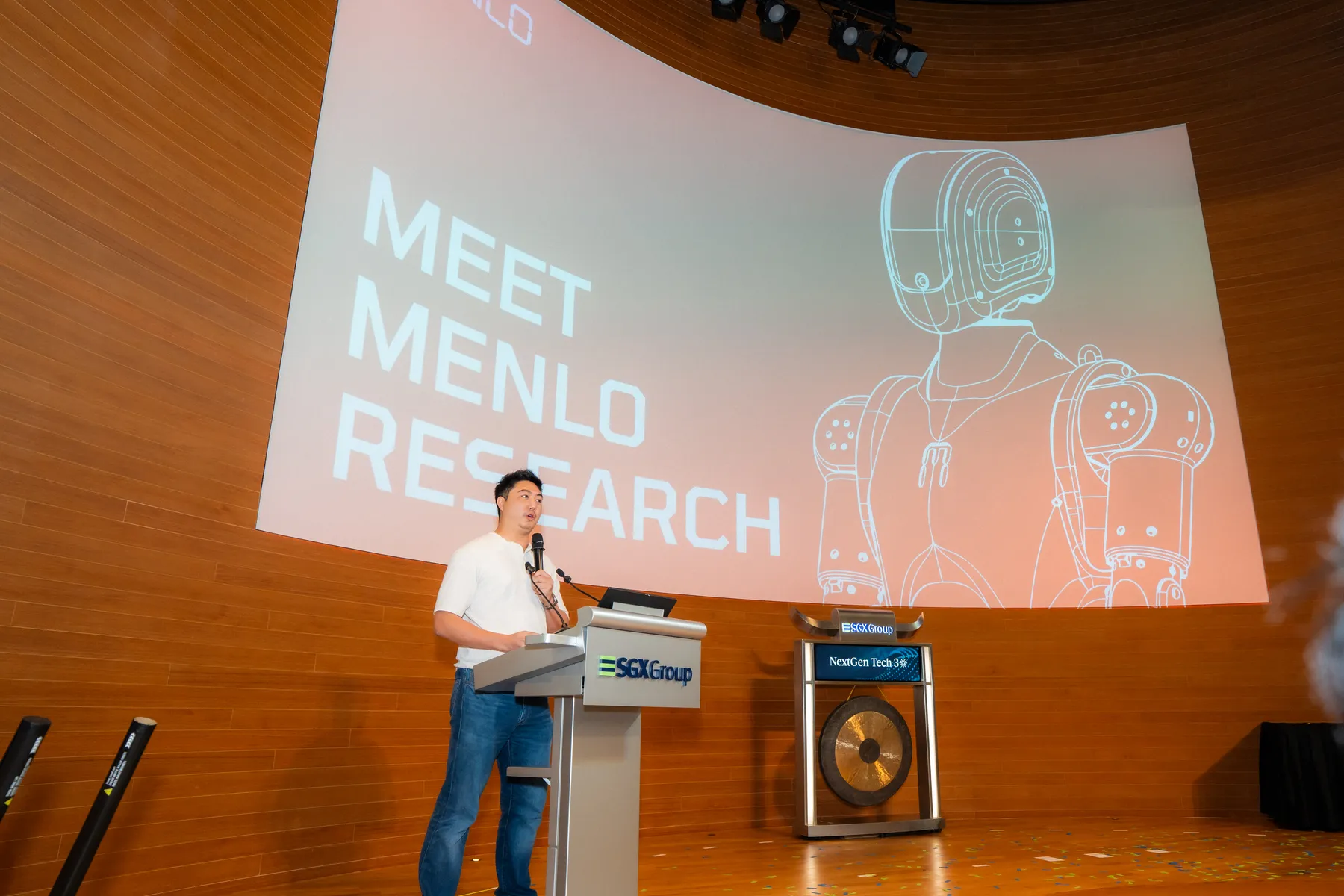
Menlo Research is a robotics company behind Asimov, a 1.2 m tall, 35 kg humanoid robot built to be repairable, accessible and deployment-ready, and Jan, an AI agent, both powered by its own models and computing infrastructure. Asimov has drawn an international community of developers, researchers, and enthusiasts who customize and improve the robot. The team is now increasingly focused on expanding the line toward machines built for real deployment and easier servicing.
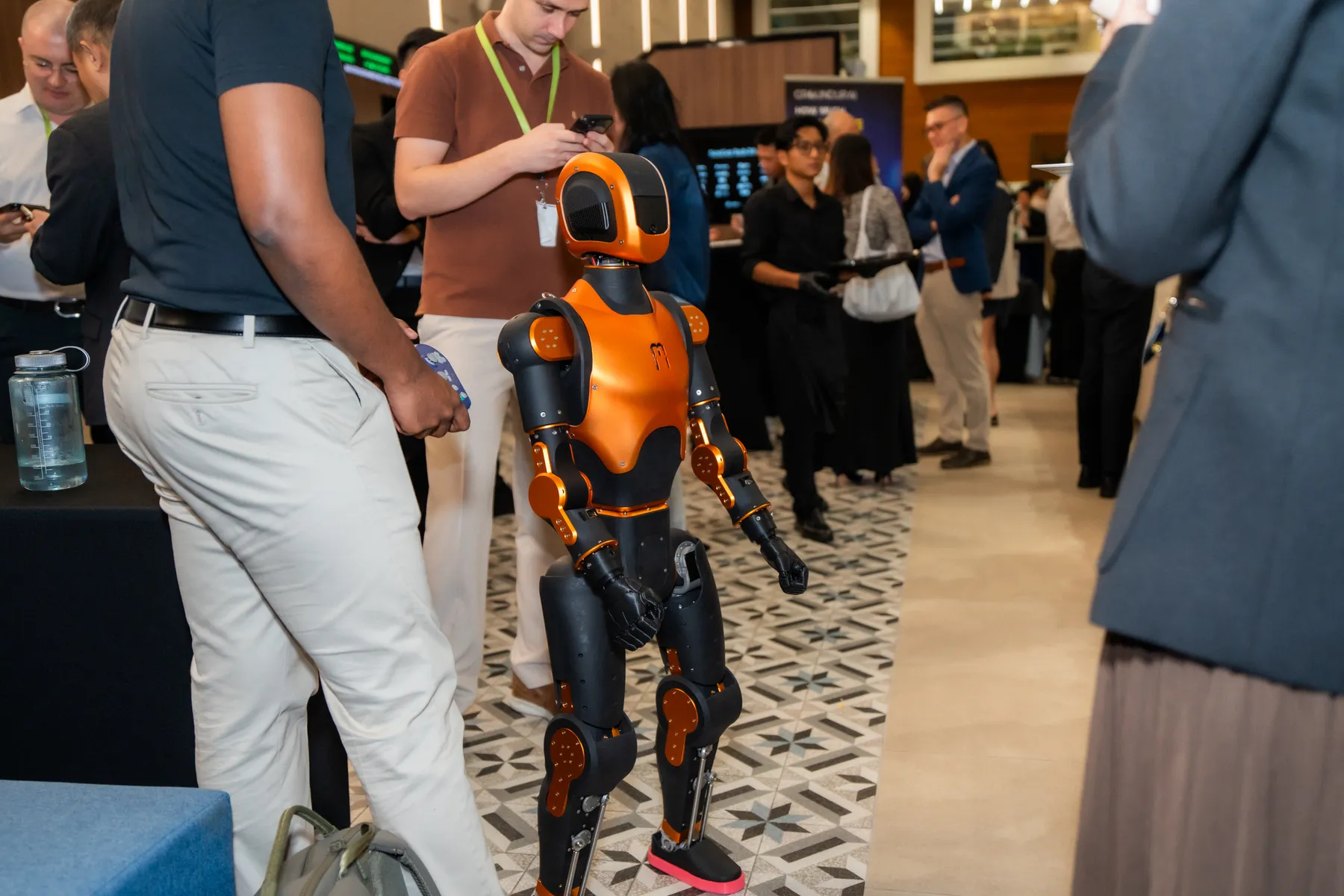
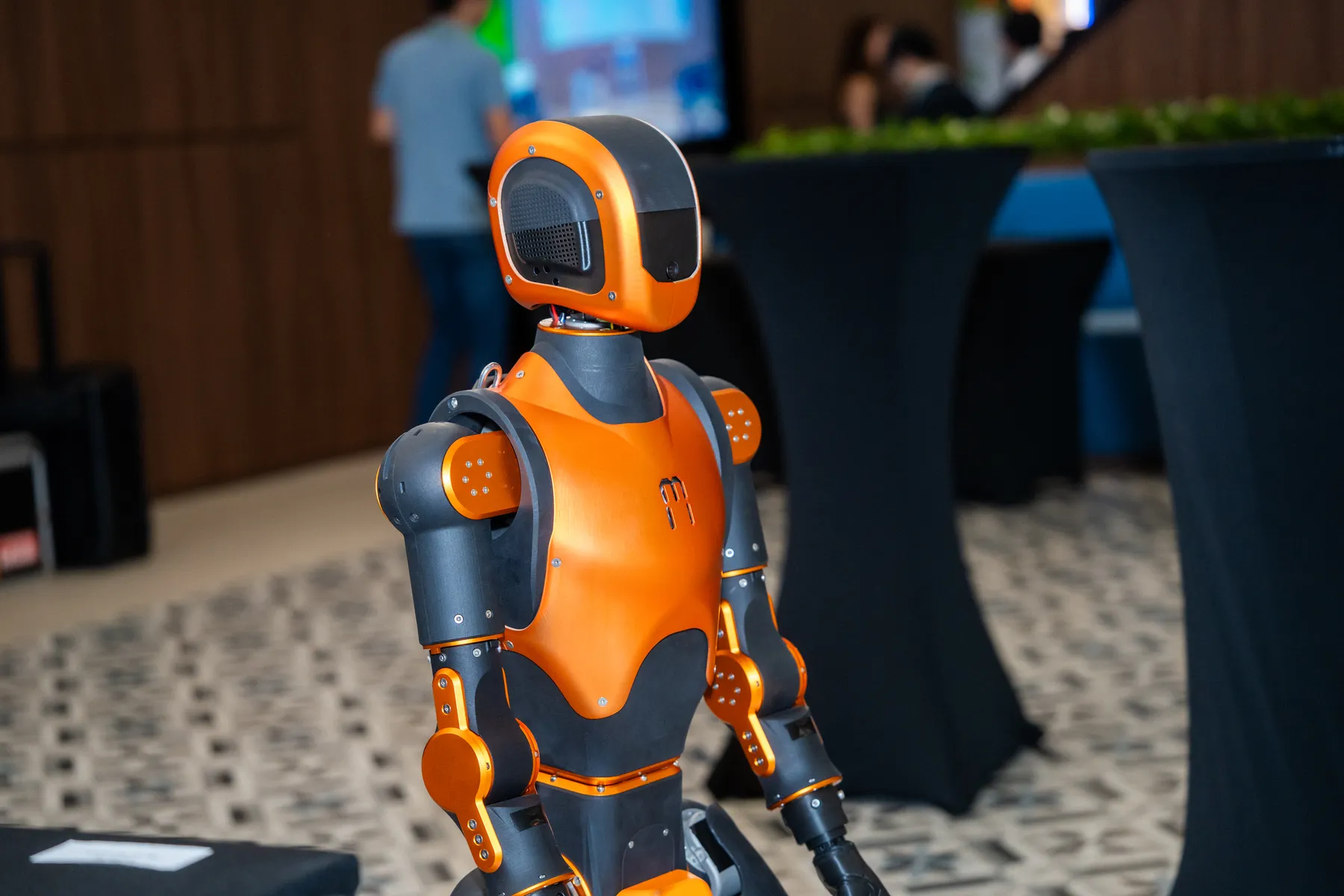
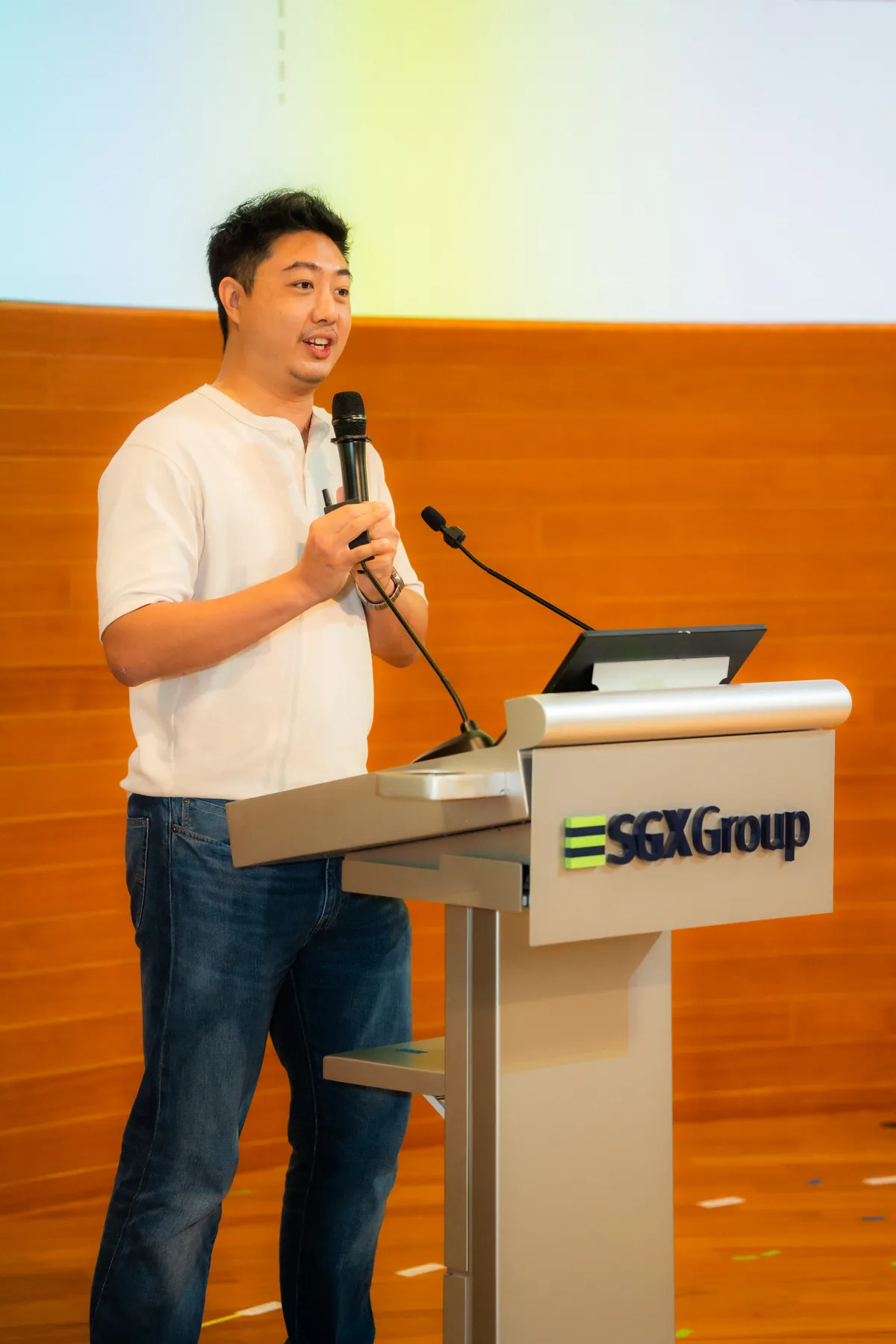
"To put AI into a robot body and for it to understand physical space is actually really difficult," said co-founder Daniel Ong. The hard part, he explained, is teaching a machine an intuitive understanding of physics so it can navigate the world and do ordinary things, like picking something up off the floor.
Speaking at the event, Chee said this year's honorees "illustrate the growing depth and breadth of Asia's innovation base," with the potential to reshape business models and transform industries. He framed the challenge ahead as turning promising startups into companies that can compete internationally: proving an idea works is one thing, making it work repeatedly across markets and at scale is another.
Ong echoed the point in his own terms, pointing to dense robotics clusters such as Shenzhen in China and Odense in Denmark as proof of how much the industry depends on nearby suppliers, talent and complementary companies. His focus now is on helping build that kind of density, along with the manufacturing capacity and supply chain resilience the field will need as it matures. "One swallow does not a summer make. It's really a whole group of companies coming together," he said.
Recognition at NGT30 connects Menlo Research to Granite Asia's network of honorees and to the investors, partners and institutions behind the program, as the company scales for a global market.
About NextGen Tech 30
NextGen Tech 30 is Asia's first public-private initiative to recognize and support the region's top growth-stage technology companies. Powered by Granite Asia in partnership with SGX Group, the program convenes sovereign funds, institutional investors, government agencies, and industry leaders to elevate companies with the potential to scale globally from Asia.
About Menlo Research
Menlo Research is the robotics company behind Asimov, a humanoid robot built to be repairable, accessible and deployment-ready, and Jan, an AI agent. Menlo works with organizations worldwide, from research labs to commercial teams, to bring robotics into real-world use. To learn more about Menlo Research, visit menlo.ai.